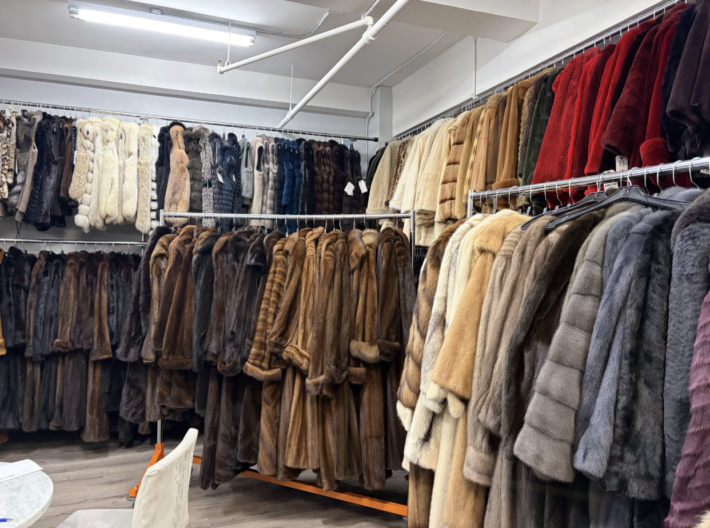
Fur coats line every wall of Madison Ave Furs, coming in all sizes, colors and styles. Away from the walls, hanging racks fill the space, creating a maze within the showroom. Larry Cowit, the store’s owner, navigates this maze seamlessly, bouncing between customers, often yelling out to them through the sea of coats. For nearly 100 years, Cowit’s family has matched, sold and altered new and vintage furs in New York City.
Midtown’s fur district has spent decades shrinking under shifting tastes, activist campaigns and rising rents. Yet several furriers say business is surging, driven by younger shoppers, vintage pieces and rising pelt prices, even as the industry loses ground on the runway. This September, New York Fashion Week went fur-free for the first time. Cowit sees that as nothing new.
Cowit explained that the latest success of animal rights advocates is part of the business.
“We have our ebbs and flows, there have been great years, lousy years, warm winters, cold winters, fur was in, fur was out.” According to Cowit, fur is now in.
Madison Ave Furs on West 30th Street is known for its vintage collection, which is experiencing a rise in popularity. For the first time in his 43 years in the business, Cowit is seeing an influx of younger clients. New Yorkers in their 20s are looking for fur coats, something Cowit couldn’t have imagined five years ago.
New furs are on the rise as well. Marc Kaufman, owner of Marc Kaufman Furs, said sales the past two years have been like no other. Kaufman is seeing a global increase in demand, with the price of some pelts rising as much as five times. With an international customer base, Kaufman is excited about the growth in prices.
“I have never seen an increase like this in our history.”
Saga Furs, a Finnish auction house, cited a 76% average price increase for mink pelts in its March auction. The U.S. Department of Agriculture tracks mink pelt prices in its annual mink survey, which showed prices falling from $94.30 in 2011 to $21.30 in 2019. Since then, prices have slowly increased, with the most recent data showing prices at $36.40 in 2024.
The rebound comes after a long decline of a trade that once defined the city. Fur has been part of New York’s economy since the Dutch settlement in the 1600s, when beaver pelts became the city’s first major export, according to the New Netherland Institute, a nonprofit organization. Two beavers appeared on the city seal as early as 1630, symbolizing the significance of the fur trade here. The trade’s popularity continued to grow into the 20th century.
At its height, the fur industry, concentrated in Midtown, was the largest fur retail market in the country, producing 80% of U.S.-made fur coats, according to FurNYC, a group representing over 100 retailers across the city. In 1979, the district between West 27th and 30th streets housed more than 600 manufacturers and 3,900 jobs, according to the U.S. Bureau of Labor Statistics. By 2019, it had dwindled to 150 businesses and 1100 jobs, and has continued to decline.
Opposition to fur has grown over the same period. Anti-fur campaigns picked up in the 1980s, led by organizations such as People for the Ethical Treatment of Animals (PETA). In 2019 the New York City Council passed an animal welfare package, but failed to include a ban on the sale of fur garments, much to activists’ dismay.
The recent Fashion Week fur ban is the latest win for those activists. The Council of Fashion Designers of America, which organizes the event, announced the ban in December 2025, following pressure from animal rights groups and precedents set by London Fashion Week in 2023 and Condé Nast, which ended fur in all its publications in 2025.
Julie Cappiello, president of Voters for Animal Rights (VFAR), said the New York Fashion Week ban is a reflection of the current moment. “There have been a number of fashion weeks that have already pulled the plug on fur specifically… so it made sense to go in that direction.” Pressure from New York City activists is what led to the official decision. “There’s a large coalition of folks in New York City who have made it their mission to end fur.” The group worked with activists to stage protests of fur retailers, and met with retailers themselves, with the goal of “finding a way forward” focused on humane alternatives, said Cappiello.
Cowit and Kaufman have noticed a decline in the size of the New York furrier community, but they attribute this to increasing rent prices and aging businesses, not lackluster sales.
In an industry that has seen constant change over the last century, Cowit finds that fur is back, just not on the runway.