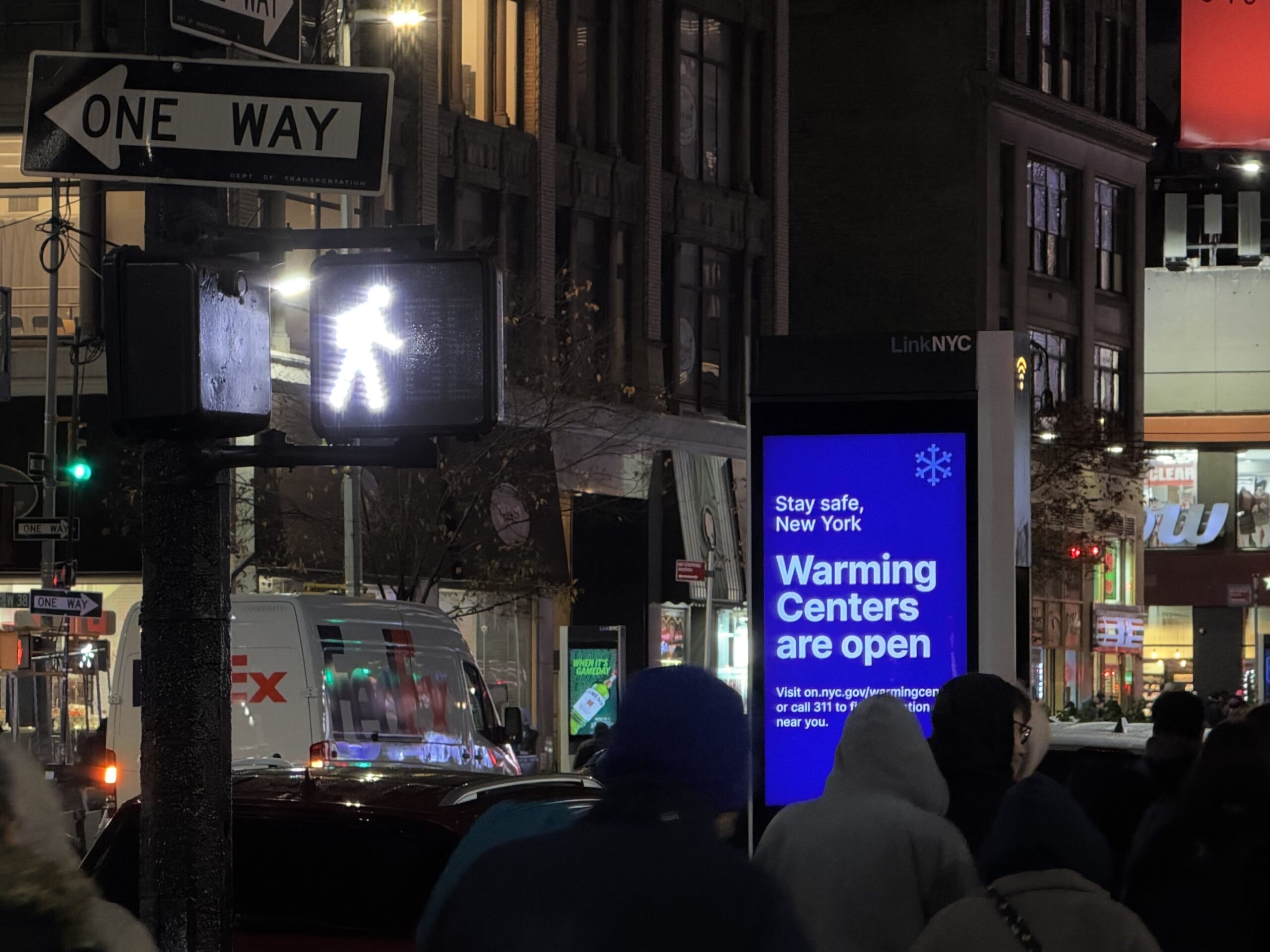
A new city law protecting homeless patients discharged into cold weather takes effect this month, joining a companion measure that took effect May 30. Both passed the City Council unanimously after last winter’s cold snap killed at least 26 people, 19 of them found outdoors, according to city officials.
Local Law 97 of 2026 requires the Department of Homeless Services (DHS) to share extreme-weather information with hospitals and help place discharged homeless patients in shelters and warming centers. Local Law 98 of 2026 requires the agency to work with hospitals to send patients out with emergency kits that include thermal blankets, hand warmers, winter hats, and gloves. But the outreach workers, nurses, and physicians who handle those discharges say the laws miss the deeper problem: patients leaving the hospital in winter need more than a blanket. And no single agency is accountable for what happens next.
“These laws are perhaps good measures but are themselves not sufficient to solve problems during Code Blue and Code Red days,” Kelly Doran, an emergency physician at Bellevue Hospital Center and an associate professor at NYU Grossman School of Medicine who studies homelessness and health, said in an email.
Last winter, New York City experienced its bitterest weeks-long cold snap since 1961, with temperatures averaging 22 degrees in Central Park from late January to early February, according to an analysis of federal weather data by Yale Climate Connections. From Jan. 19 to Feb. 9, the city made about 1,400 placements and involuntarily transported 34 people, while a March count estimated around 4,991 people were unsheltered on a single night, according to the Department of Social Services.
“When we get these individuals, sometimes they cannot function and help themselves, because sometimes they don’t even have the insight that they have a problem,” said Ozioma Offor, a psychiatric nurse practitioner and outreach nurse with the New York City Department of Homeless Services.
Getting someone off the street safely in winter usually involves four parts: reaching and treating them, then discharging them and helping them find a place to stay. Typically, Offor’s team connects homeless people to care and takes them to hospitals.
Code Blue alerts are issued from 4 p.m. to 8 a.m. when the night’s forecast calls for 32 degrees or below, including wind chill. Code Red is its summer counterpart for extreme heat. Yet most cold-exposure deaths occurred outside periods of extreme cold. About 75% of those who died had been exposed to the cold outdoors, and about half of that group were homeless or suspected to be homeless, according to the most recent study listed on the New York City Health Department website, published in 2018.
“The new laws only seem to apply to Code Blue and Code Red days — a minority of days in the year,” Doran said.
Doran said hospitals are supposed to ensure discharge plans are realistic and safe for patients, following a process designed to coordinate care.
“My impression is that some hospitals follow it variably as there is not a penalty for noncompliance,” she said.
DHS did not respond to requests for comment.
Jeremy Feigelson, a Senior Adviser at the Metropolitan Transportation Authority (MTA) who works on homelessness and public safety, said the MTA steps up outreach each winter to move people from the subway into shelters, but the biggest challenge is bringing services together so they can move toward stability. Homeless people often have more than one need, he said.
“They don’t just need a bed. They also need drug treatment or psychiatric care or both.”